Achilles Tendonitis & Heel Pain Gold Coast
Achilles tendinopathy and heel pain are among the most common lower limb conditions in active people and in those who spend long hours on their feet.
Whether you have a reactive Achilles tendon in the early stages of overload, a degenerative midsubstance tendinopathy that has been present for months, insertional Achilles pain at the back of the heel, or plantar heel pain at the arch, our physiotherapists, chiropractors, and osteopaths provide accurate diagnosis and targeted rehabilitation.
Book Now
Understanding Achilles Tendinopathy & Heel Pain
Tendinopathy Not Tendinitis
The term tendinitis implies active inflammation, but research shows that most persistent tendon pain involves a degenerative process within the tendon structure rather than classical inflammation. This matters because anti-inflammatory approaches including rest, ice, and NSAIDs have a limited role in tendinopathy and can delay the loading-based rehabilitation that actually drives recovery. Understanding tendon biology guides a far more effective treatment approach.
The Reactive vs Degenerative Continuum
Tendons exist on a continuum from reactive at one end, where an acute overload produces a thickened, sensitised tendon, to degenerative at the other, where longstanding changes produce a structurally compromised tendon with disorganised collagen. Reactive tendinopathy responds well to load management and progressive reloading. Degenerative presentations require longer, more systematic loading programs. The clinical presentation and history helps locate the tendon on this continuum.
Insertional vs Midsubstance
Insertional Achilles tendinopathy at the calcaneal attachment is driven by compressive load as the tendon wraps around the back of the heel bone. It is aggravated by heel drops, aggressive stretching, and anything that increases compression at the insertion. Midsubstance tendinopathy involves the central third of the tendon and is driven by tensile load during activity. These two presentations are treated differently and confusing them produces poor outcomes.
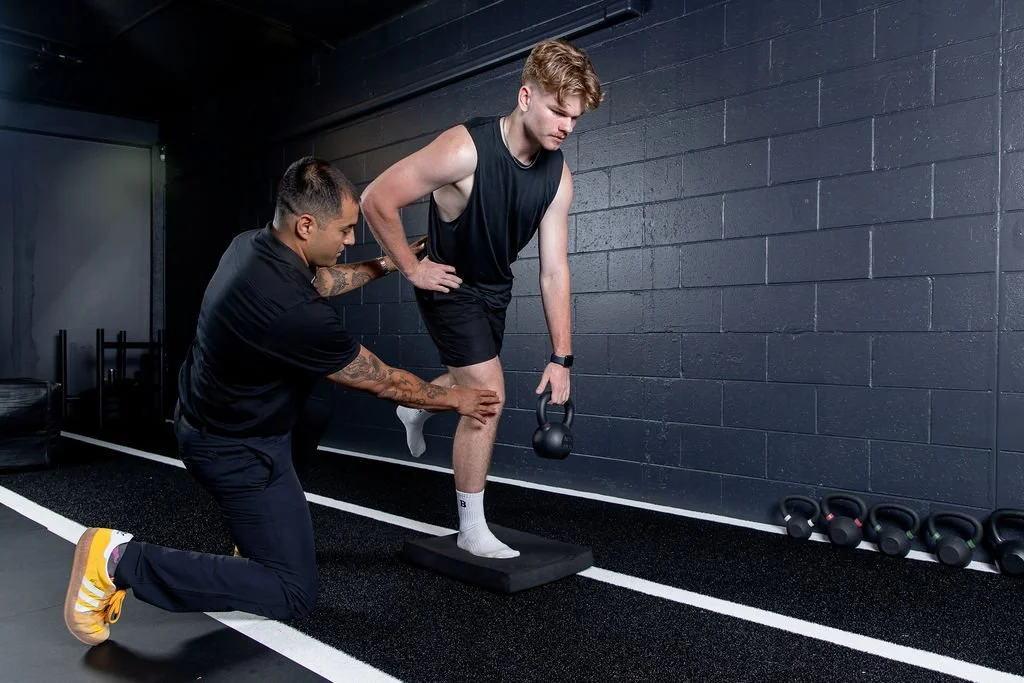
At The Good Joint our team accurately diagnoses the specific type and location of Achilles and heel pain and applies a loading program calibrated to the tendon's current capacity and the demands you need to return to.
Book Visit
WHAT TO EXPECT DURING YOUR FIRST VISIT
Discussion:
A brief chat about what's brought you in and how it has been impacting your lifestyle.
Physical Assessment:
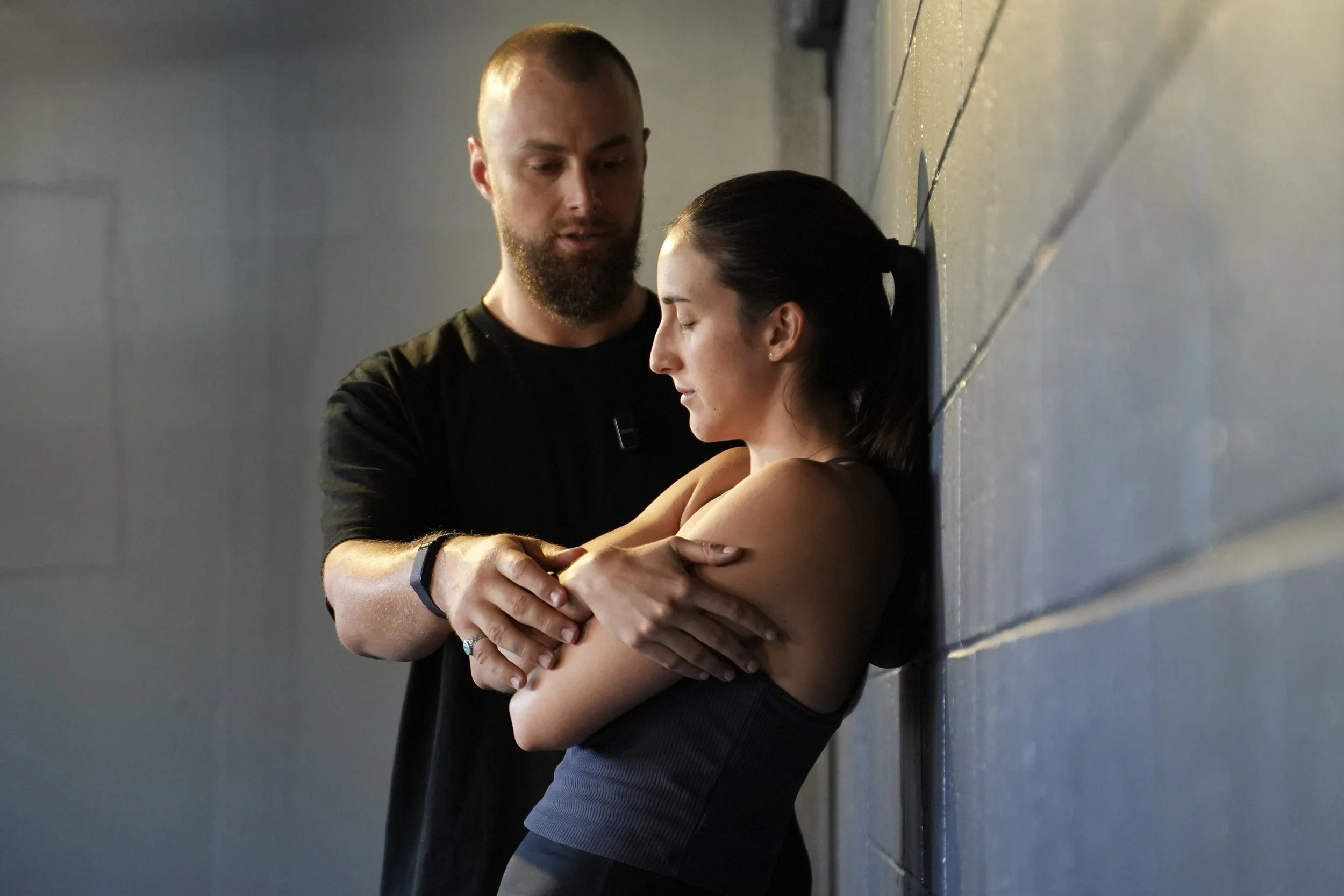
Functional testing to assess and identify underlying factors contributing to your symptoms.
Recovery Plan:
A tailored approach for working on your specific needs, including personalised exercise prescription.
Treatment:
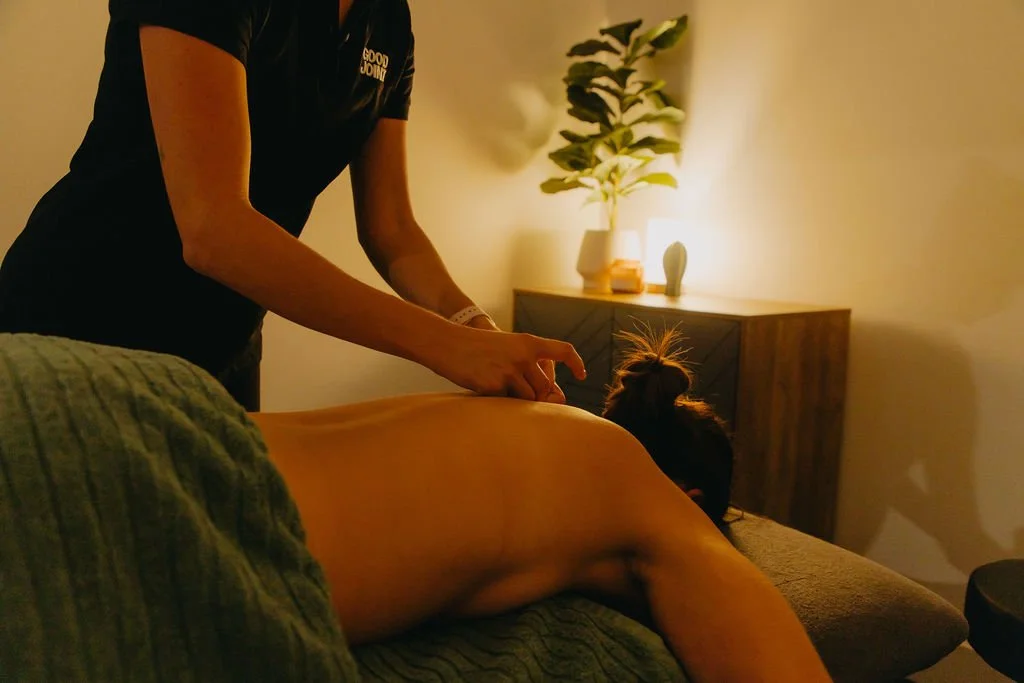
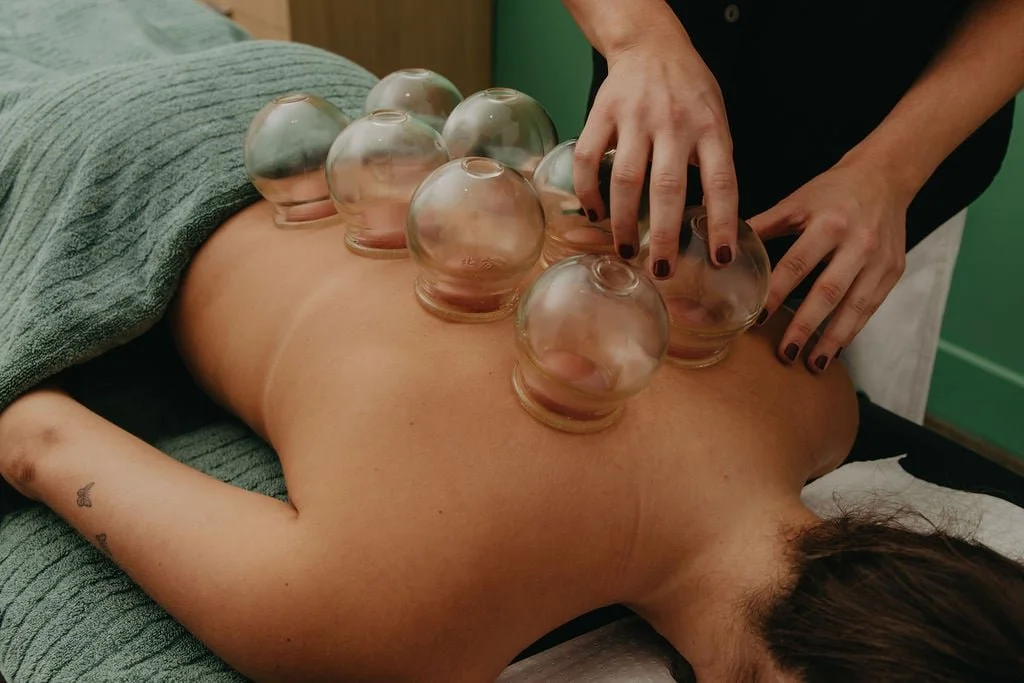
Hands-on treatment including active release, soft tissue work, and dry needling for fast relief.
Common Causes of Achilles & Heel Pain
Midsubstance Achilles Tendinopathy
Midsubstance Achilles tendinopathy involves pathological change in the central portion of the Achilles tendon, typically two to six centimetres above the heel bone. It presents as morning stiffness that eases with activity and pain during or after loading. Heavy slow resistance training and progressive eccentric loading are the most evidence-supported rehabilitation strategies, producing meaningful improvement over eight to twelve weeks.
Insertional Achilles Tendinopathy
Insertional Achilles tendinopathy involves the Achilles at its attachment to the calcaneus and is distinct from midsubstance tendinopathy in both its pain behaviour and its treatment. Heel drops and Achilles stretching, which are first-line for midsubstance tendinopathy, worsen insertional symptoms by increasing compressive load at the insertion. Isometric loading, heel raises rather than drops, and load management are the primary treatment strategies.
Plantar Fasciitis & Plantar Heel Pain
Plantar fasciitis produces pain at the undersurface of the heel, typically worst with the first steps in the morning and after periods of sitting. It involves degenerative change at the plantar fascia origin on the calcaneus and is influenced by calf tightness, foot mechanics, footwear, and training load. Progressive loading of the plantar fascia through specific exercises produces the best outcomes alongside load management and footwear assessment.
Haglund's Deformity
A Haglund's deformity is a bony prominence at the posterior-superior aspect of the heel bone that creates a hard bump and increases compressive irritation of the Achilles insertion. It is associated with insertional Achilles symptoms and is aggravated by certain footwear with rigid heel counters. Management focuses on insertional tendinopathy rehabilitation strategies alongside footwear modification.
Training Load Errors
The most common driver of Achilles and heel pain is a rapid increase in training load, including mileage, intensity, surface hardness, or footwear change, that exceeds the tendon's current capacity to adapt. Identifying the load error and correcting it is as important as the rehabilitation exercise program. Continuing to train through tendon pain without addressing the load is the primary reason tendinopathies become chronic.
Achilles and heel pain that is accurately diagnosed and rehabilitated with an appropriate progressive loading program produces excellent outcomes in the majority of cases. Understanding the specific tendon pathology and treating it accordingly is the difference between a three-month recovery and a twelve-month one.
Book Visit
Signs of Achilles & Heel Pain
Achilles and heel symptoms follow patterns that help distinguish between the different conditions involved. The timing of pain in relation to activity, and where exactly the pain is located, are the most important diagnostic clues.
Achilles and heel pain that is managed with rest alone almost always returns when activity is resumed because the underlying tendon capacity has not been developed. A progressive loading program is the most important element of lasting recovery.
Book NowFrequently Asked Questions About Achilles Tendinopathy & Heel Pain
What is the best treatment for Achilles tendinopathy?
Progressive tendon loading is the most evidence-based treatment for midsubstance Achilles tendinopathy. The Alfredson heavy slow resistance protocol and isometric loading for reactive presentations have the strongest evidence base. Loading is progressed from isometric to isotonic to dynamic and speed-specific over eight to twelve weeks. Passive treatments including massage, ultrasound, and stretching provide symptom relief but do not produce the tendon adaptation that drives lasting recovery.
How long does Achilles tendinopathy take to resolve?
Reactive tendinopathy caught early and managed with appropriate load reduction and progressive reloading can resolve within four to eight weeks. Established midsubstance tendinopathy typically requires three to six months of consistent loading program. Insertional tendinopathy can take longer due to the compressive nature of the pathology and the need to avoid aggravating positions during recovery. Consistent adherence to the loading program is the primary determinant of timeline.
Should I rest my Achilles?
Complete rest is counterproductive for most Achilles tendinopathies beyond the initial reactive phase. Tendons respond to load and atrophy with rest. The goal is to find the load that the tendon can currently tolerate without worsening and progressively increase that load over time. This may mean reducing running volume while maintaining strength training, or substituting higher-impact activity with lower-impact options while the program is established.
Can plantar fasciitis be cured?
Yes. Most plantar fasciitis resolves fully with appropriate management over three to six months. The key elements are progressive loading of the plantar fascia through specific exercises, calf flexibility and strength work, footwear optimisation, and load management during the recovery period. Cortisone injection provides short-term pain relief but has not been shown to improve long-term outcomes and is associated with plantar fascia rupture with repeated use.
Do orthotics help Achilles and heel pain?
Orthotics can be a useful adjunct by reducing the load demand on the Achilles and plantar fascia during the acute phase of rehabilitation. However, they are an adjunct, not a treatment. Addressing the underlying tendon and fascial capacity through progressive loading is the primary intervention. Indefinite orthotic use without addressing the underlying tissue capacity does not produce lasting resolution.