Arm Pain, Numbness & Tingling Gold Coast
Arm pain, numbness, or tingling that extends from the shoulder to the fingers is rarely a problem originating in the arm itself. In most cases it reflects referral or compression from the neck, shoulder, or thoracic outlet.
Whether your symptoms are coming from a disc in the cervical spine, a tight scalene compressing the brachial plexus, or a nerve entrapment at the elbow or wrist, identifying the actual source is essential before any treatment can be effective. Our team traces arm symptoms to their origin and treats the cause.
Book Now
Why Arm Pain Needs a Full Assessment
The Source Is Rarely in the Arm
Pain, numbness, or tingling that travels down the arm almost always originates upstream. The cervical spine, thoracic outlet, and shoulder can all refer symptoms into the arm, forearm, and hand in specific distributions that correspond to the nerve or structure involved. A superficial assessment that treats the arm itself misses the source entirely and explains why many arm pain presentations remain unresolved despite local treatment.
Nerve vs Referred Pain vs Vascular
Distinguishing between nerve compression producing dermatomal numbness, referred pain from a joint or muscle producing a more diffuse aching pattern, and vascular compression producing pallor or swelling is critical to accurate diagnosis. Each requires a different treatment approach and each has different red flags that require further investigation.
Upper Limb Neurodynamic Assessment
Nerve tension testing of the upper limb assesses the mobility and sensitivity of the brachial plexus and its terminal branches. A positive neural tension test helps confirm that the symptoms are nerve-mediated and identifies where in the nerve's course the restriction or sensitisation is occurring. This information directly guides treatment.
At The Good Joint our clinicians take a systematic approach to arm pain - tracing the symptom pattern to its source, confirming it through clinical testing, and applying targeted treatment to the structure actually responsible.
Book Visit
WHAT TO EXPECT DURING YOUR FIRST VISIT
Discussion:
A brief chat about what's brought you in and how it has been impacting your lifestyle.
Physical Assessment:
Functional testing to assess and identify underlying factors contributing to your symptoms.
Recovery Plan:
A tailored approach for working on your specific needs, including personalised exercise prescription.
Treatment:
Hands-on treatment including active release, soft tissue work, and dry needling for fast relief.
Common Sources of Arm Pain & Nerve Symptoms
Cervical Radiculopathy
A compressed cervical nerve root produces sharp, burning, or electric pain that travels in a specific pathway from the neck into the arm and hand. The specific finger distribution identifies the affected level. C6 involvement affects the thumb and index finger. C7 affects the middle finger. C8 affects the ring and little fingers. Neurological testing of strength, reflexes, and sensation confirms the level and guides treatment and referral decisions.
Thoracic Outlet Syndrome
The thoracic outlet is the space between the collarbone and first rib through which the brachial plexus and subclavian vessels pass. Compression here produces diffuse arm pain, heaviness, and ulnar-side numbness that worsens with overhead activity and prolonged arm use. It is strongly associated with forward head posture, tight scalenes, and postural habits. Physiotherapy and osteopathy produce excellent results in most cases.
Cubital Tunnel Syndrome
Ulnar nerve entrapment at the elbow, known as cubital tunnel syndrome, produces pain at the inner elbow with numbness and tingling in the ring and little fingers. It is worsened by prolonged elbow flexion including computer use and phone holding. Nerve mobilisation, activity modification, and addressing posture and workstation setup are the primary conservative treatment strategies.
Carpal Tunnel Syndrome
Compression of the median nerve at the wrist produces numbness, tingling, and pain in the thumb, index, and middle fingers, particularly at night and with sustained wrist flexion. Wrist mobilisation, nerve flossing exercises, and ergonomic modification are effective conservative measures. Splinting at night can provide symptomatic relief while the underlying cause is addressed.
Referred Pain From Myofascial Trigger Points
Trigger points in the scalene, infraspinatus, subscapularis, and other muscles around the shoulder and neck can refer pain into the arm in patterns that closely mimic nerve compression. Identifying and releasing these trigger points through dry needling or manual pressure can produce rapid resolution of what appeared to be a nerve problem but was actually muscular referral.
Arm pain, numbness, and tingling that do not have a clear local cause are almost always telling you something about the neck, shoulder, or brachial plexus. Tracing the symptoms to their source is the single most important step in resolving them.
Book Visit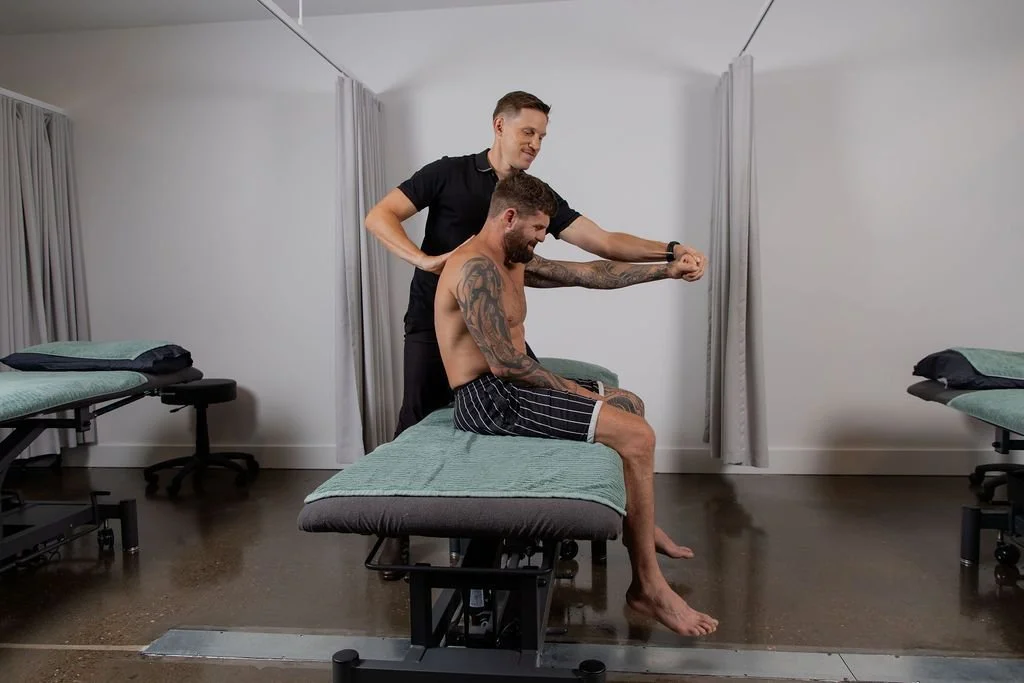
Symptoms That Suggest Your Arm Pain Needs Assessment
Arm symptoms that involve numbness, tingling, or weakness are telling you something about the nervous system. These patterns are worth taking seriously and investigating rather than waiting to see if they settle.
Arm pain with neurological features including numbness, tingling, or weakness requires accurate assessment to identify the source. Most presentations respond well to conservative care once the diagnosis is clear.
Book NowFrequently Asked Questions About Arm Pain, Numbness & Tingling
Can neck problems cause arm pain and tingling?
Yes, and this is one of the most common causes of arm symptoms. The nerves supplying the arm exit the spine at the cervical levels. A disc bulge, arthritic change, or facet joint restriction at any of these levels can compress or irritate the corresponding nerve root, producing pain, numbness, tingling, or weakness that travels along the nerve's distribution into the arm and hand. Treating the neck resolves the arm symptoms without ever touching the arm itself.
How do I know if my arm pain is a nerve problem or something else?
Nerve-related arm pain tends to follow a specific pathway, travel to specific fingers, and may be associated with tingling, numbness, or weakness. It often changes with neck or shoulder position. Referred pain from muscles and joints tends to be more diffuse, aching in character, and less precisely located. A clinical assessment using neurological testing and orthopaedic provocation tests distinguishes between the two with a high degree of accuracy.
What is thoracic outlet syndrome and how is it treated?
Thoracic outlet syndrome involves compression of the brachial plexus between the collarbone and first rib, producing arm pain and ulnar-side numbness that worsens with overhead and prolonged arm use. It is treated with physiotherapy focused on scalene and pectoral stretching, cervicothoracic mobility, postural correction, and first rib mobilisation. Most cases respond well to conservative management without requiring surgical decompression.
Should I be worried about arm pain with tingling?
In most cases, no, but it warrants assessment. Most arm pain with tingling is mechanical nerve compression from the neck or thoracic outlet and responds well to treatment. Red flags that require prompt medical attention include progressive weakness, symptoms in both arms simultaneously, symptoms following significant trauma, or arm symptoms alongside changes in walking, balance, or bladder and bowel function.
Can dry needling help arm pain?
Yes. Dry needling into myofascial trigger points in the neck, shoulder, and upper back can directly reduce referred arm pain and muscle tension that is contributing to nerve compression. It is particularly useful for trigger-point-mediated referral that is mimicking nerve pain, and as a complement to joint mobilisation and exercise in cervical radiculopathy.