Golfer's Elbow (Medial Epicondylitis) Treatment Gold Coast
Golfer's elbow produces pain and tenderness on the inner side of the elbow and forearm weakness that can make gripping, lifting, and wrist movements painful and limiting.
Whether your symptoms are from golf, manual work, gym training, or sustained desk and mouse use, The Good Joint provides accurate diagnosis and evidence-based tendon rehabilitation that resolves the cause rather than just managing the pain.
Book Now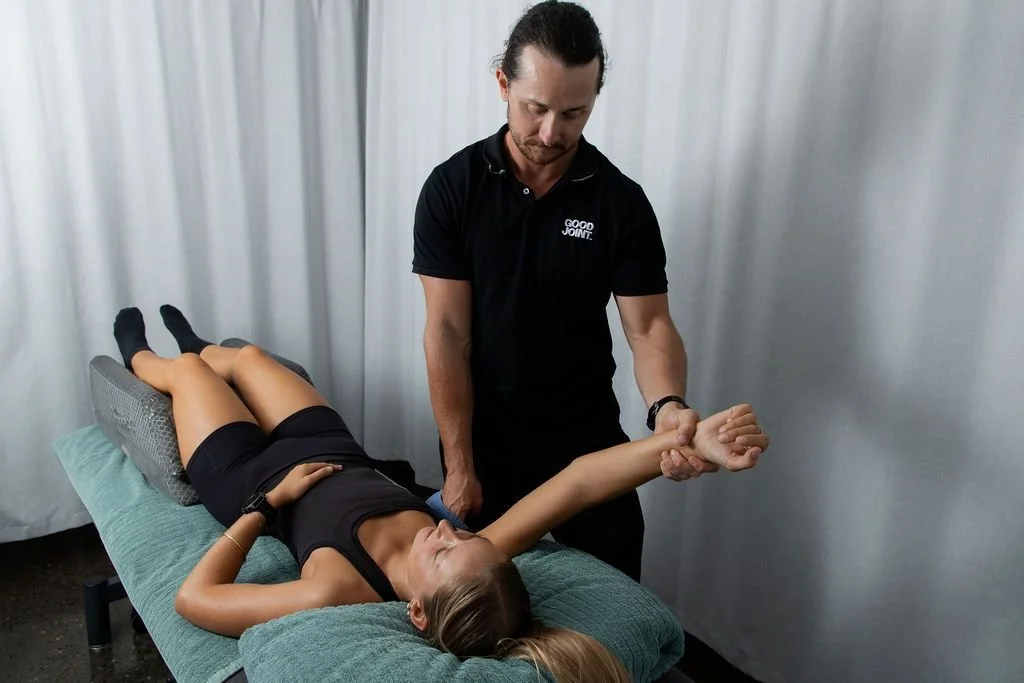
Understanding Golfer's Elbow
What Is Golfer's Elbow?
Golfer's elbow, or medial epicondylitis, involves degenerative change and irritation at the common flexor tendon origin on the medial epicondyle of the humerus. The flexor-pronator muscles of the forearm all attach here, and repetitive or overloading activity produces cumulative damage to the tendon. Despite its name, golfer's elbow affects many more non-golfers than golfers, and the term epicondylitis is actually a misnomer — most presentations involve tendinopathy rather than active inflammation.
The Cervical Spine Connection
A clinically important and frequently missed contributor to medial elbow pain is involvement of the lower cervical spine. The C8 nerve root, which exits at the C7-T1 level, supplies the medial forearm and little finger and can produce pain patterns that mimic or overlap with medial epicondylitis. A thorough assessment of the cervical spine and ulnar nerve pathway is a standard component of elbow assessment at The Good Joint, ensuring that cervical contributions are not missed.
Load Management & Progressive Rehabilitation
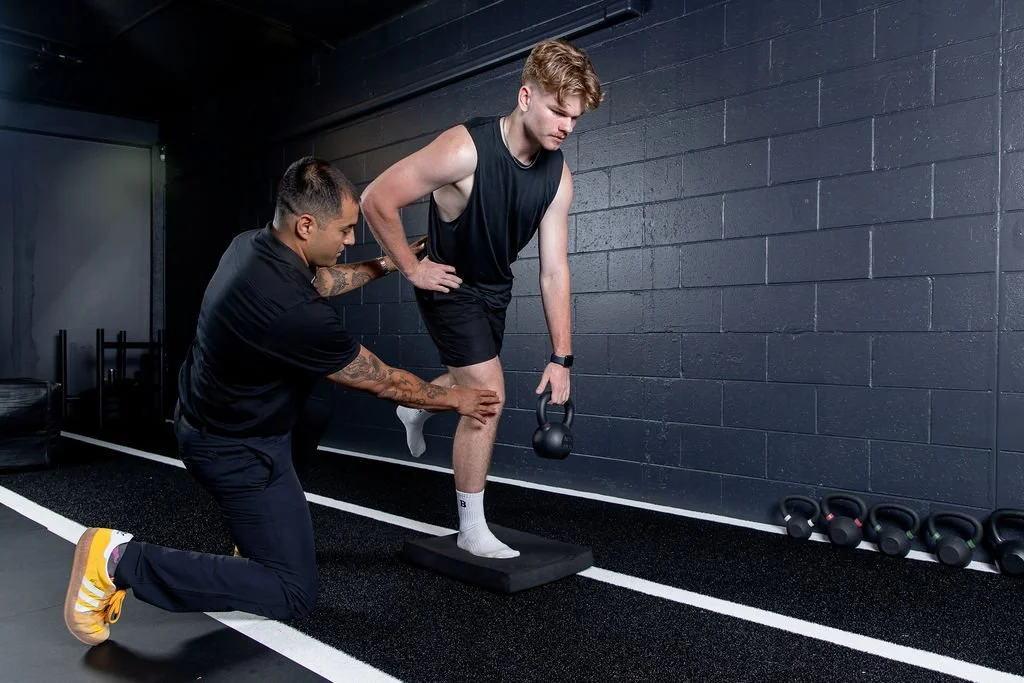
Golfer's elbow responds best to a progressive tendon loading program that restores the flexor-pronator tendon's capacity to tolerate the demands placed on it. Rest alone does not restore tendon capacity and is why most people who stop painful activity find symptoms return when they resume training or work. A structured program of isometric through isotonic to functional loading, matched to symptom response, produces lasting resolution.
At The Good Joint our physiotherapists, chiropractors, and osteopaths provide accurate medial elbow assessment and a progressive tendon rehabilitation program tailored to your specific injury and activity demands.
Book Visit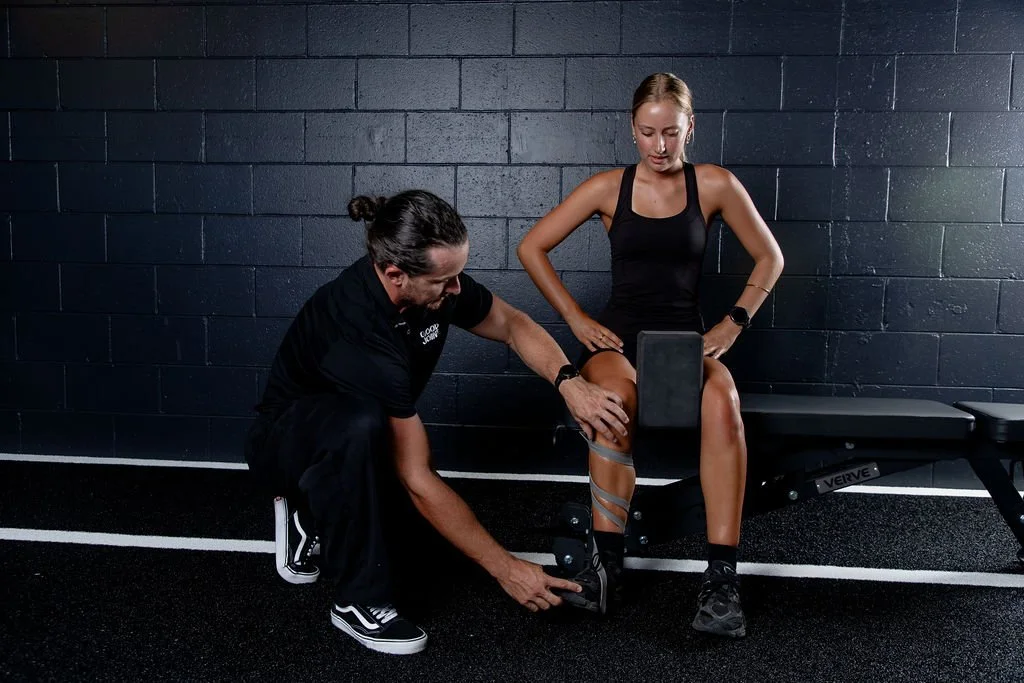
WHAT TO EXPECT DURING YOUR FIRST VISIT
Discussion:
A brief chat about what's brought you in and how it has been impacting your lifestyle.
Physical Assessment:
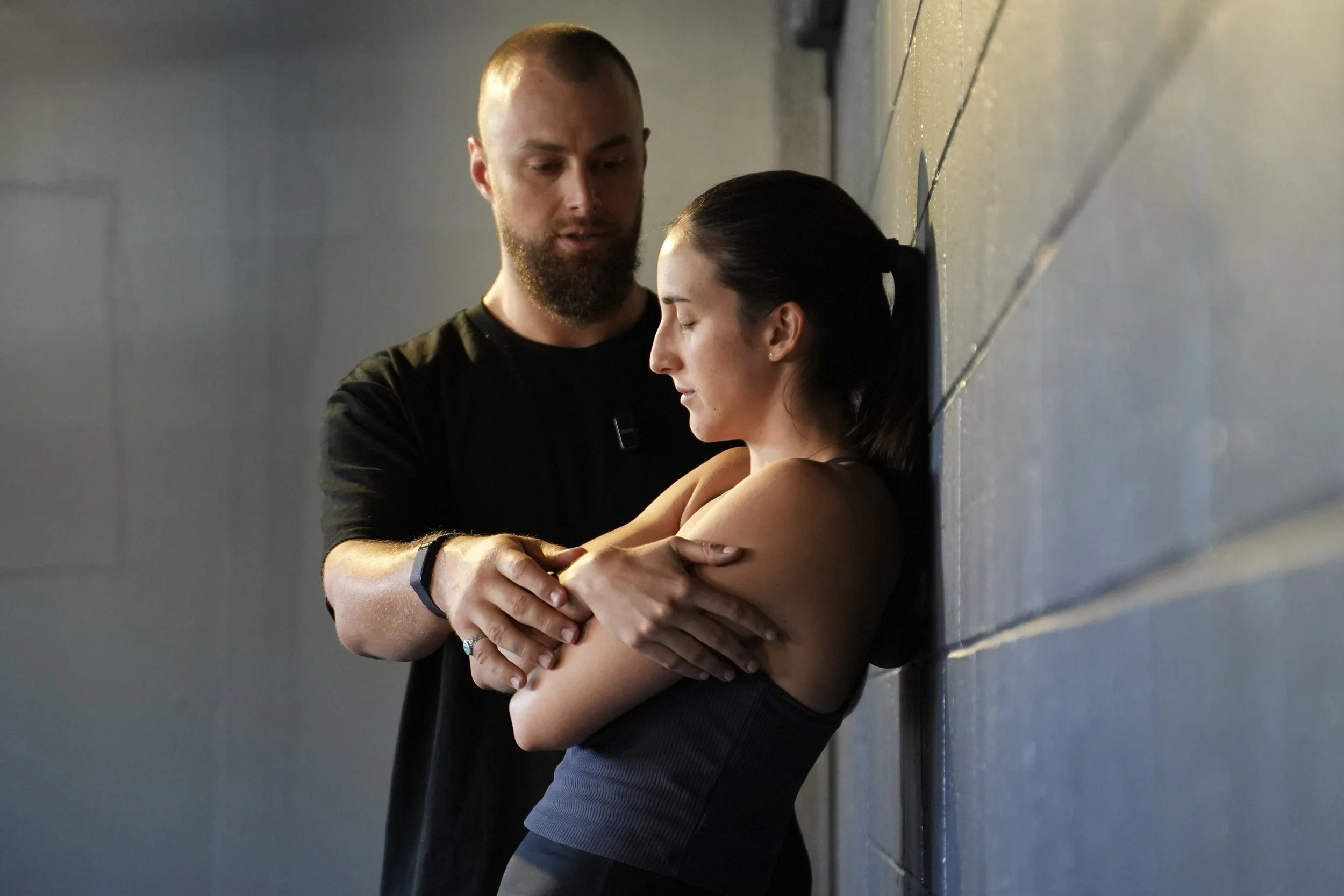
Functional testing to assess and identify underlying factors contributing to your symptoms.
Recovery Plan:
A tailored approach for working on your specific needs, including personalised exercise prescription.
Treatment:
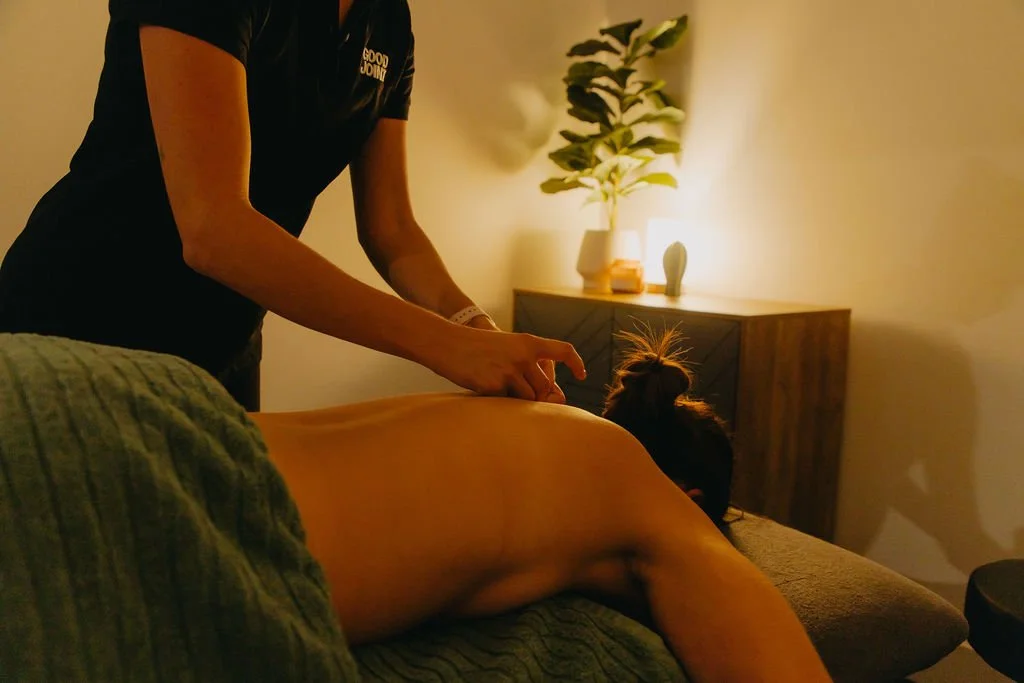
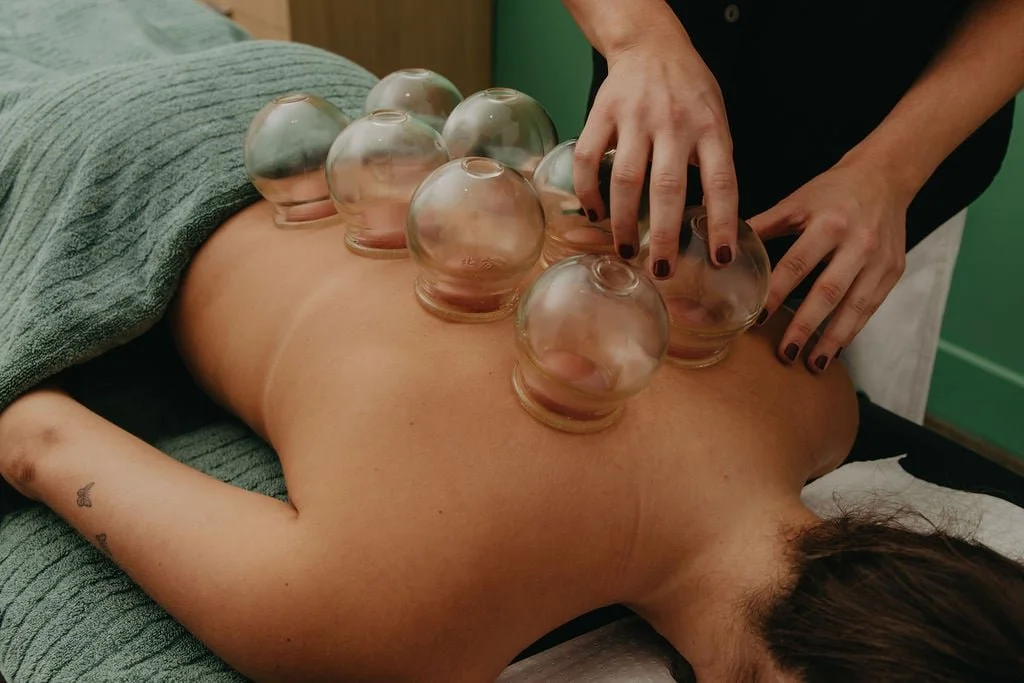
Hands-on treatment including active release, soft tissue work, and dry needling for fast relief.
What Causes Golfer's Elbow
Repetitive Wrist Flexion & Gripping
The most common mechanism of medial epicondylitis involves repetitive or sustained loading of the wrist flexors and forearm pronators. Trades requiring heavy gripping, rock climbing, golf, baseball pitching, throwing sports, and sustained mouse and keyboard use all involve repeated eccentric and concentric loading of the common flexor tendon. The cumulative load exceeds the tendon's capacity to adapt, producing reactive and then degenerative tendinopathy.
Acute Overload
Less commonly, medial epicondylitis develops from a single acute overload event — a heavy lift, an awkward carrying position, or a sudden forceful wrist flexion against resistance. These acute presentations typically produce a more discrete onset of pain and localised tenderness, and often recover faster than gradually developing tendinopathy when managed appropriately from the outset.
Ulnar Nerve Involvement
The ulnar nerve passes through the cubital tunnel immediately posterior to the medial epicondyle. In presentations involving both medial epicondyle tenderness and tingling or numbness in the ring and little fingers, ulnar nerve irritation must be considered alongside or instead of flexor tendinopathy. Distinguishing between these diagnoses or identifying their coexistence directly influences treatment.
Cervical Spine Referral
Lower cervical spine dysfunction, particularly at C7-T1, can refer pain to the medial elbow in a pattern indistinguishable from medial epicondylitis on initial presentation. This cervicogenic contribution is particularly likely when pain is diffuse rather than precisely localised to the medial epicondyle, when there is associated neck pain or stiffness, and when local elbow treatment has not produced expected improvement.
Inadequate Recovery & Training Load Errors
Rapid increases in training volume or intensity — particularly in weightlifting, racquet sports, and throwing activities — overwhelm the flexor-pronator tendon's adaptive capacity. Inadequate recovery between sessions, poor warm-up practices, and returning to training before a previous presentation has fully resolved are the most common load-related contributors to recurrent medial epicondylitis.
Golfer's elbow that is accurately assessed — including the cervical spine, ulnar nerve, and full tendon picture — and rehabilitated with a structured progressive loading program produces significantly better long-term outcomes than rest-based management alone.
Book Visit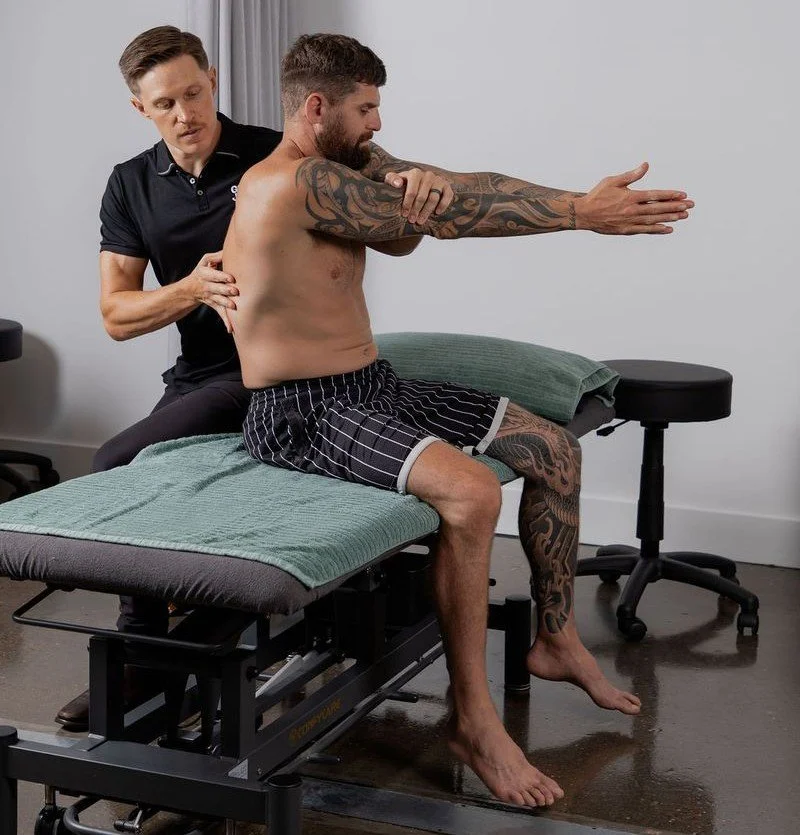
Common Signs & Symptoms of Golfer's Elbow
Medial epicondylitis produces a specific and recognisable pain pattern centred on the inner elbow. Understanding whether additional nerve or cervical features are present significantly influences the treatment approach.
Medial elbow pain managed with rest alone tends to return when activity resumes. A progressive loading program that builds tendon capacity alongside identification of any cervical or ulnar nerve involvement produces more complete and lasting recovery.
Book NowFrequently Asked Questions About Golfer's Elbow
What is the difference between golfer's elbow and tennis elbow?
Golfer's elbow (medial epicondylitis) affects the inner elbow and involves the wrist flexor and forearm pronator tendons. Tennis elbow (lateral epicondylitis) affects the outer elbow and involves the wrist extensor tendons, particularly ECRB. Both are tendinopathies driven by repetitive overload, both are more common in non-athletes than their names suggest, and both respond to progressive tendon loading rehabilitation. The key practical distinction is the location of pain and the specific movements that provoke it.
Should I rest from all activity with golfer's elbow?
Complete rest from all activity is not recommended for established tendinopathy. Rest allows pain to settle but does not restore tendon capacity, and symptoms reliably return when activity is resumed. A modified approach that reduces the specific provocative loads while introducing progressive tendon loading exercises is more effective and avoids the deconditioning that prolonged rest produces. Your physiotherapist will guide you on what to continue, modify, and progressively reintroduce.
Does a cortisone injection help golfer's elbow?
Cortisone injection can provide short-term pain relief for medial epicondylitis. Evidence suggests it reduces pain in the first six to twelve weeks but does not improve outcomes at twelve months compared to physiotherapy-led rehabilitation. It may be useful as a bridge to allow the rehabilitation program to begin when pain is severe enough to limit participation. At The Good Joint we can advise whether this is appropriate for your specific presentation and liaise with your GP accordingly.
How long does golfer's elbow take to recover?
Reactive tendinopathy caught early typically improves within four to eight weeks of consistent loading-based rehabilitation. Established degenerative tendinopathy often requires three to six months of progressive loading before full resolution. The single most important factor in recovery timeline is adherence to the loading program between appointments. Stopping the program when pain reduces, rather than completing it through to full capacity restoration, is the primary reason for recurrence.
Can neck problems cause elbow pain?
Yes. The C8 nerve root from the lower cervical spine supplies the medial forearm and ring and little fingers. Compression or irritation of this nerve root can produce pain, tingling, and weakness in the medial elbow and forearm that closely mimics golfer's elbow. This is more likely when symptoms are diffuse, associated with neck pain, or have not responded to local elbow treatment. A clinical assessment that includes the cervical spine and ulnar nerve pathway identifies this contribution and ensures treatment is directed at the correct source.