ITB Syndrome (Iliotibial Band Pain) Treatment Gold Coast
ITB syndrome produces sharp lateral knee pain that strikes with a characteristic onset at a consistent point during a run — and it is one of the most common overuse injuries in distance runners.
Whether your ITB pain is new and responding to rest, or is established and returning every time you try to build mileage again, The Good Joint provides accurate biomechanical assessment and a structured rehabilitation program that addresses the hip, running mechanics, and load factors driving it.
Book Now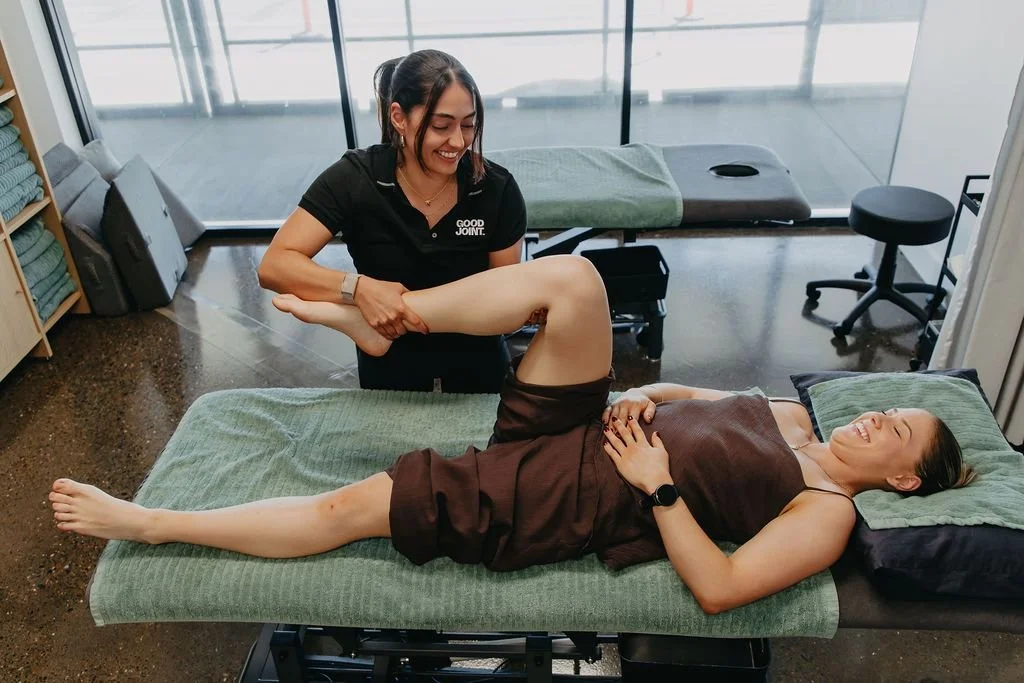
Understanding ITB Syndrome
What Is the Iliotibial Band?
The iliotibial band is a thick band of fascia running from the hip to the lateral tibial condyle below the knee. At approximately thirty degrees of knee flexion, the ITB moves over the lateral femoral epicondyle. When the hip lacks abductor strength, when running load is excessive, or when running mechanics produce excessive knee valgus, this repetitive friction or compression produces the lateral knee pain characteristic of ITB syndrome. Understanding the mechanism at your specific presentation guides the most effective treatment approach.
The Hip-Knee Connection in ITB Pain
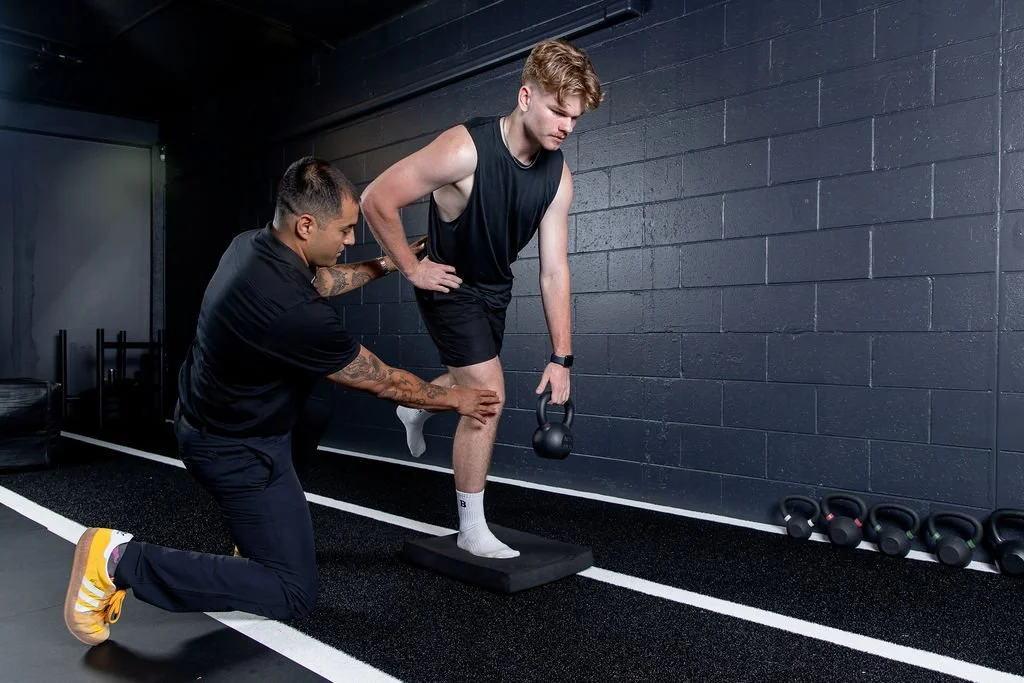
Contrary to the traditional view of ITB syndrome as simply a tight band requiring stretching, current evidence points to gluteal muscle weakness — particularly the gluteus medius — as the primary driver of most ITB presentations. Weak hip abductors allow excessive femoral adduction and internal rotation during running, increasing tension through the ITB and compression forces at the lateral knee. Hip strengthening, not prolonged foam rolling or stretching, is the most evidence-supported treatment approach.
Training Load & the Point-of-No-Return
A distinctive feature of ITB syndrome is that pain typically begins at a consistent point in a run — often after twenty to thirty minutes — before which there is no pain. This onset point tends to shorten as the condition progresses. The consistent onset reflects the cumulative load threshold of the irritated tissue rather than warming up. Managing training volume below this threshold while building hip and running capacity is the key to recovery.
At The Good Joint our physiotherapists, chiropractors, and osteopaths assess hip strength, running mechanics, training load, and foot mechanics to identify the specific drivers of your ITB syndrome and build a targeted plan.
Book Visit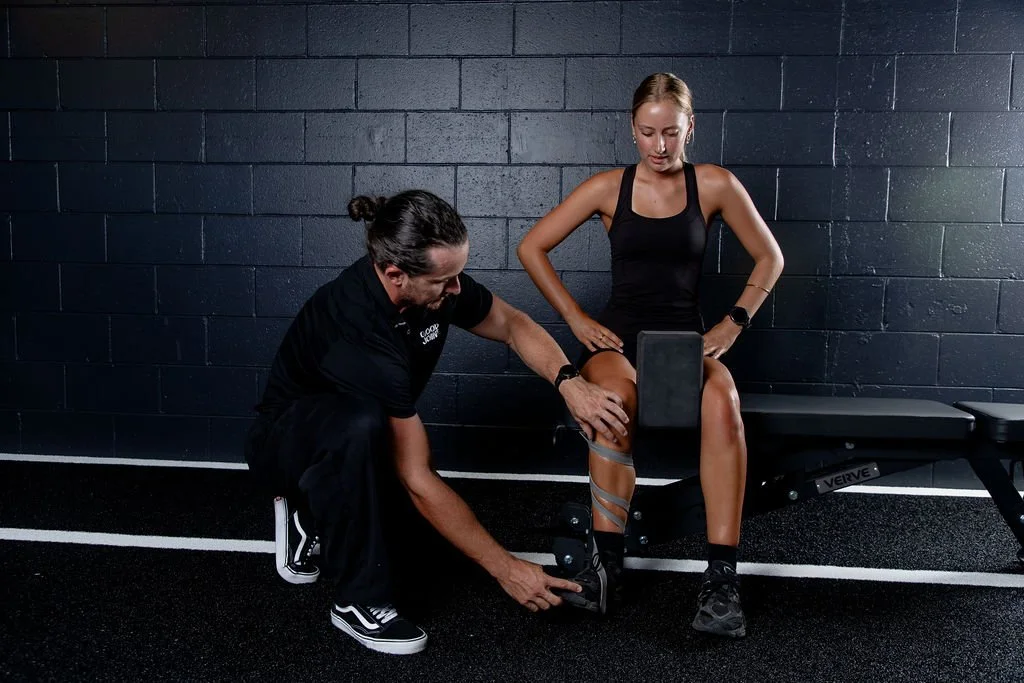
WHAT TO EXPECT DURING YOUR FIRST VISIT
Discussion:
A brief chat about what's brought you in and how it has been impacting your lifestyle.
Physical Assessment:
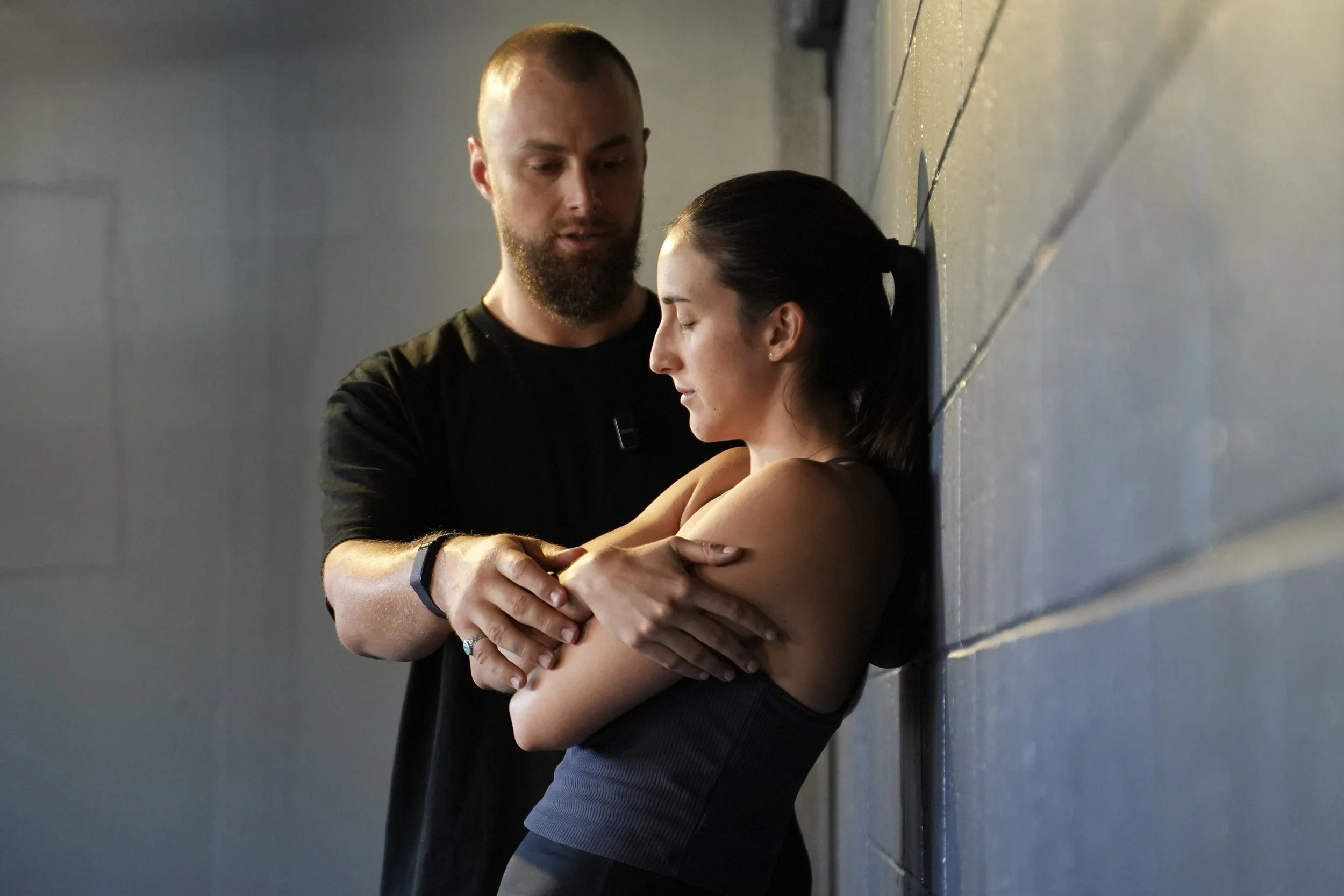
Functional testing to assess and identify underlying factors contributing to your symptoms.
Recovery Plan:
A tailored approach for working on your specific needs, including personalised exercise prescription.
Treatment:
Hands-on treatment including active release, soft tissue work, and dry needling for fast relief.
What Causes ITB Syndrome
Hip Abductor Weakness
Gluteus medius weakness is consistently identified as the primary biomechanical contributor to ITB syndrome in runners. When the hip abductors are insufficient, the hip drops into adduction during the single-leg support phase of running, increasing ITB tension and lateral knee compression. Progressive hip abductor strengthening through loading positions that do not aggravate the ITB is the most effective and evidence-supported intervention available.
Training Load Spikes
A rapid increase in running mileage is the most common trigger for ITB syndrome. The condition is particularly common in new marathon runners, people returning to running after a break, and athletes significantly increasing their weekly volume. The ITB and its associated compressive structures respond to load increases more slowly than the cardiovascular system, meaning fitness improvements outpace structural tolerance.
Running Technique — Hip Drop & Crossover Gait
A contralateral hip drop during running (Trendelenburg gait pattern) and a crossover step pattern, where the foot lands across the midline of the body, are both strongly associated with ITB syndrome. These patterns increase knee valgus and ITB compression at the lateral knee. Simple technique modifications including widening step width and increasing hip abductor engagement can produce rapid reductions in ITB loading.
Downhill Running & Surface Changes
Downhill running significantly increases the forces acting at the lateral knee as the foot contacts the ground with the knee closer to the thirty-degree compression angle. Adding hills too quickly, particularly downhill running, is a common precipitating factor in ITB syndrome. Road camber and surface changes that increase lateral loading at the knee are also contributing factors.
Foam Rolling & Stretching — The Wrong Approach
Prolonged foam rolling and stretching of the ITB is one of the most common and least effective approaches to ITB syndrome. The ITB is an inert fascial structure that does not meaningfully lengthen with stretching. More importantly, these approaches do not address the hip weakness and running mechanics that drive the condition. Foam rolling may temporarily reduce lateral knee sensitivity but will not prevent recurrence without addressing the underlying cause.
ITB syndrome is one of the most reliably resolved running injuries when the hip strength and mechanics driving it are properly assessed and addressed. A comprehensive rehabilitation program consistently outperforms the rest-and-return cycle that keeps most runners in a loop of repeated setbacks.
Book Visit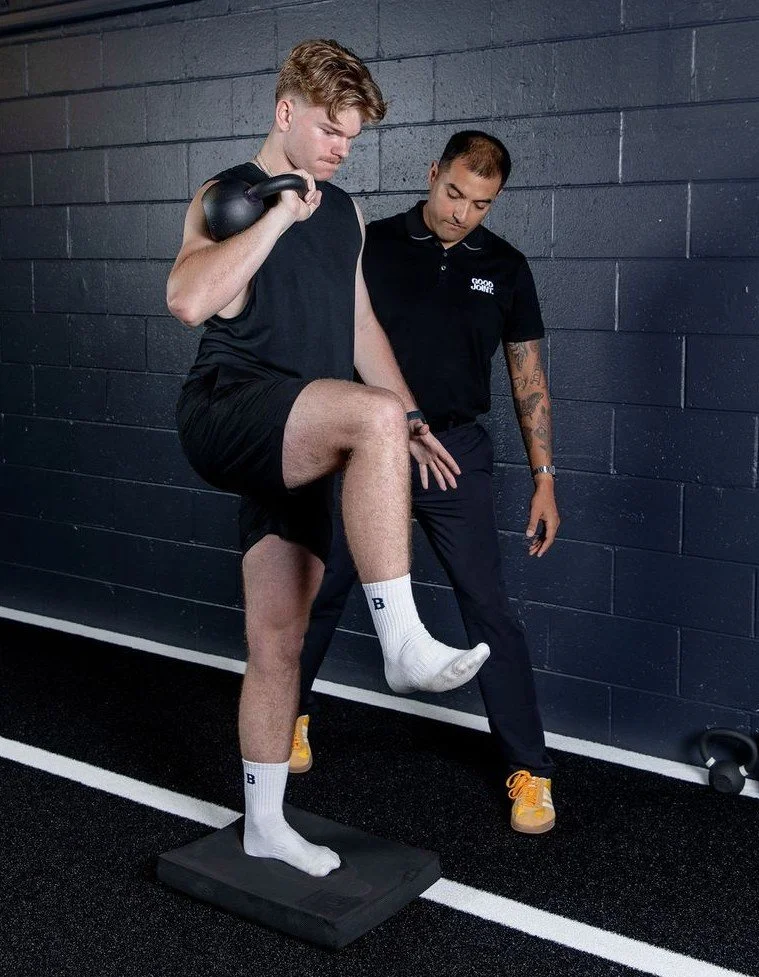
Signs & Symptoms of ITB Syndrome
ITB syndrome produces a very specific pattern of lateral knee pain linked to a consistent onset point during running. This characteristic pattern distinguishes it from other causes of lateral knee pain.
ITB syndrome that is managed with rest and foam rolling without addressing hip strength and running mechanics returns predictably when mileage is resumed. A comprehensive approach that identifies the biomechanical and load drivers resolves the condition in a way that resting alone never can.
Book NowFrequently Asked Questions About ITB Syndrome
Should I stop running with ITB syndrome?
Complete cessation of running is rarely necessary and not always the most effective approach. Reducing running volume below the symptomatic threshold, combined with a progressive hip strengthening and running technique program, allows the condition to be addressed while maintaining some running capacity. This approach consistently produces better outcomes than stopping entirely, particularly when the underlying hip and mechanical contributors are addressed concurrently.
Does foam rolling ITB syndrome help?
Foam rolling the lateral thigh may temporarily reduce pain sensitivity and is not harmful, but it does not address the underlying cause of ITB syndrome. The ITB is an inert fascial structure that does not meaningfully lengthen with rolling or stretching. Spending time on hip abductor strengthening and running technique modification produces far more durable improvement. Foam rolling is reasonable as part of a warm-up or cool-down but should not replace the rehabilitative work.
How long does ITB syndrome take to resolve?
With a comprehensive approach addressing hip strength, running technique, and load management, most people see meaningful improvement within six to ten weeks. Return to full unrestricted running typically takes three to four months. Presentations that have been present for a long time or have been managed with rest-and-return cycles without addressing the underlying cause take longer to resolve fully. The quality of the rehabilitation program is the primary determinant of timeline.
Is surgery ever needed for ITB syndrome?
Rarely. Surgery for ITB syndrome is reserved for a very small proportion of presentations that have comprehensively failed conservative management over six to twelve months. The vast majority of ITB syndrome — including longstanding cases — responds well to a thorough conservative approach addressing hip strength, running mechanics, and load management. Surgery is almost never required when appropriate conservative rehabilitation has been consistently and correctly implemented.
What is the single most important thing I can do for ITB syndrome?
Strengthen the gluteus medius. Hip abductor weakness is the most consistently identified driver of ITB syndrome in runners, and progressive hip abductor strengthening is the most evidence-supported single intervention. Combined with a structured return to running that manages load, and where relevant, running technique modification to reduce crossover and hip drop, this approach resolves most ITB presentations that have been unresponsive to stretching and rest.