
The gap between graduating and becoming the best in your area isn't time. It's what you do with it.
A hands-on weekend intensive for new graduates and early-career clinicians who are done waiting for confidence to arrive on its own.
Only 20 spots available. Once it's full, it's full.
"University teaches you what a lumbar disc is. It doesn't teach you what to do when the patient in front of you is scared, stiff, and sceptical."
Here's what nobody told you before you graduated.
Most clinicians leave university technically trained but practically underprepared. You know the anatomy. You passed the exams. But private practice is a different game entirely – and nobody gave you the rulebook.
The result? Patients who don't rebook. Exercises that don't get done. Schedules that stay half-empty. And a quiet but relentless question in the back of your mind: Am I actually good enough at this?
Hands
Technique that works on a textbook patient doesn't always work on the hypermobile 22-year-old or the stiff 100kg tradie. University shows you one version. Real practice needs three.
Head
Good clinical skills don't guarantee compliance. If a patient doesn't understand their plan, believe in it, or trust you – they won't rebook. Communication is a clinical skill.
Heart
Without wins – clinical or financial – doubt compounds fast. The attrition and burnout hitting new grads isn't about skill. It's about not tasting success early enough to stay in the game.
This isn't a motivation problem.
It's a system problem.
The gap between graduation and genuine clinical confidence is real – and it's costing the profession. Talented clinicians are leaving private practice within their first few years not because they're not smart, but because nobody handed them what they actually needed to succeed.
Most post-grad education gives you more theory. What you need is a different set of tools entirely: hands-on technique variation, patient communication frameworks, and a structure for building a practice that doesn't rely on luck.
Average years before burnout hits new graduates in private practice
Days to learn what most practitioners spend years figuring out the hard way
Hours of DISC-based communication training in the average healthcare degree
This seminar exists because I spent years and a significant amount of my own money chasing the answers universities never gave me – from neurology lectures to dentistry seminars to anything that made me better. I built it the hard way so you don't have to.
One day. Three pillars. Everything you needed on day one.
The Private Practice Intensive is a hands-on, fast-paced day built around the three things that actually determine whether a new grad thrives or burns out: technique that works across real patient presentations, communication that creates genuine compliance, and the confidence architecture to back it all up.
This is not another CPD box-tick. This is the instruction manual private practice never came with.
What you'll learn
Three pillars. All practical. Zero filler.
Hands – Clinical Technique Mastery
Real patients don't look like textbook patients. We go beyond the standard technique and show you how to adapt, modify, and execute across the presentations you'll actually see.
- Spinal manipulation across three patient types: standard, hypermobile, and large/stiff
- Hands-on adjusting confidence and force calibration
- When to use which approach – and why it matters
- Root cause and sequencing: finding the interference, not just the symptom
- Rib cage and breathing biomechanics – the most underassessed system in practice
Head – Communication That Creates Compliance
The best clinical plan in the world fails if your patient doesn't understand it, believe in it, or trust you to lead them through it. This is where most new grads lose patients – and where you'll stop.
- DISC profiling: understanding how different patients process information and make decisions
- Explaining care plans with clarity and conviction
- The rebooking conversation – how to present the plan without it feeling like a sales pitch
- Exercise compliance: why patients don't do their homework and how to change that
- Handling the "I'll see how I go" patient
Heart – Building a Full Schedule Early
Winning early matters. The confidence that comes from a full schedule and real clinical outcomes is what keeps talented practitioners in the profession. Here's how to build it systematically.
- The new patient experience from first contact to second appointment
- Follow-up systems: how to run reactivation without it feeling clinical or cold
- Community outreach and referral network building
- Practitioner identity: becoming the go-to clinician in your area
- The mindset and habits of high-performers in private practice
How the day runs
This is a small group, in-clinic intensive. Twenty people maximum. Not a lecture theatre – a working clinic. Which means you'll be practising, not just listening.
Morning – Pillar 1: Hands
Hands-on manipulation sessions across patient presentations you'll actually see in clinic – standard, hypermobile, and large/stiff. You'll adjust, be adjusted, and receive direct feedback. This is the part most post-grad courses skip entirely.
Afternoon – Pillar 2: Head
Scenario-based communication training with real scripts, real objections, and real conversations. DISC profiling applied directly to how you explain care plans, handle the "I'll see how I go" patient, and get exercises actually done.
Morning – Pillar 3: Heart
How to build a full schedule from scratch. Referral networks, follow-up systems, community outreach, and the practitioner identity that makes people refer their friends to you. You'll leave before lunch with a written 90-day action plan – specific, sequenced, and ready to implement Monday morning.
Small group size is intentional. Twenty people means you get hands-on time, direct feedback, and actual answers to your specific clinical questions – not generic advice designed for a crowd. Sunday's early finish means you can travel home or have the afternoon to yourself.
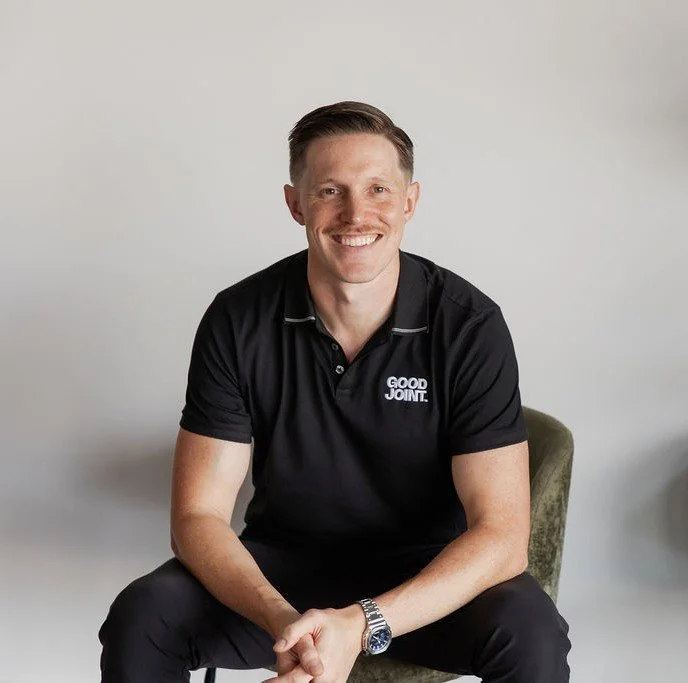
About your presenter
I didn't get good at this because I had better opportunities. I got good because I refused to stop until I found the answers – and I looked everywhere for them. My attention naturally gravitated toward cross-disciplinary competence: seeking out training well beyond my own field to build the clinical range that complex cases demand. Anything that made me a more complete clinician.
That autodidact approach, driven by what most people would call a disadvantage (ADHD), produced a clinical range I couldn't have built through conventional post-grad pathways. I built The Good Joint on the Gold Coast as Australia's version of what integrated healthcare should look like – chiropractors, physiotherapists, massage therapists, and allied health working together like tradespeople building the same house.
This seminar exists because I wasted years and money finding what should have been handed to me on day one. I'm not interested in keeping that to myself.
Everything included on the day
Weekend In-Clinic Intensive
Saturday full day + Sunday morning – three pillars across 1.5 days in a working clinic environment.
Technique Variation Demonstrations
Live demonstrations and practise across multiple patient presentations – not just the textbook case.
DISC Communication Framework
Applied directly to patient scenarios you'll face in your first year of private practice.
90-Day Practice Action Plan
A written, personalised plan to implement immediately after the day.
Reference Materials & Scripts
Take-home resources covering every key framework, script, and system from the day.
Catering
Lunch and refreshments throughout the day included.
This is for you if…
Investment
A weekend. Skills you'll use for the rest of your career.
- Saturday + Sunday morning
- All materials included
- Catering included
- 90-day action plan
- Saturday + Sunday morning
- All materials included
- Catering included
- 90-day action plan
Seats are strictly limited to 20 participants to ensure quality of hands-on time. Payment secures your place. No refunds within 14 days of the event, but your ticket is fully transferable.
Common questions
Does this count toward my CPD?
Yes. Under AHPRA's practitioner self-reporting framework, there is no mandatory third-party approval required for a learning activity to qualify as CPD. All content in this seminar is evidence-based and clinically referenced. Attendees receive a certificate of completion documenting hours and learning outcomes, which is exactly what you need to support your CPD declaration if audited. Check your professional association's policy for any specific requirements relevant to your discipline.
What discipline is this designed for?
This seminar is designed for chiropractors, physiotherapists, and osteopaths. All three disciplines will get full value from the hands-on technique and clinical reasoning content, the DISC communication frameworks, and the practice-building systems. The spinal manipulation sessions are applicable to all manipulation-trained clinicians across these professions.
I graduated more than 5 years ago. Is this still relevant?
Yes – particularly the communication and practice-building content. The technique variation sessions are valuable at any stage. If you're still working to fill your schedule or improve patient compliance, this day is designed for you regardless of years of experience.
What do I need to bring?
Comfortable clothes you can move and be adjusted in, a notebook, and an open mind. All other materials are provided on the day.
Will this be run again?
Possibly – but not guaranteed. The small group format is intentional and requires significant preparation. If you want to attend, this intake is the one to lock in.
Stop figuring it out the hard way.
Twenty seats. One day. Everything private practice didn't come with.
Reserve Your Seat →Questions? Email info@thegoodjoint.com.au