Whiplash & Car Accident Injuries Gold Coast
Whiplash is one of the most misunderstood injuries in musculoskeletal care - often dismissed as minor but capable of producing persistent, complex symptoms when not properly assessed and treated.
Whether your injury is recent and acute, or you are dealing with symptoms that have lingered since an accident months or years ago, our chiropractors, physiotherapists, and osteopaths provide thorough assessment, evidence-based treatment, and WorkCover or CTP documentation support throughout your recovery.
Book Now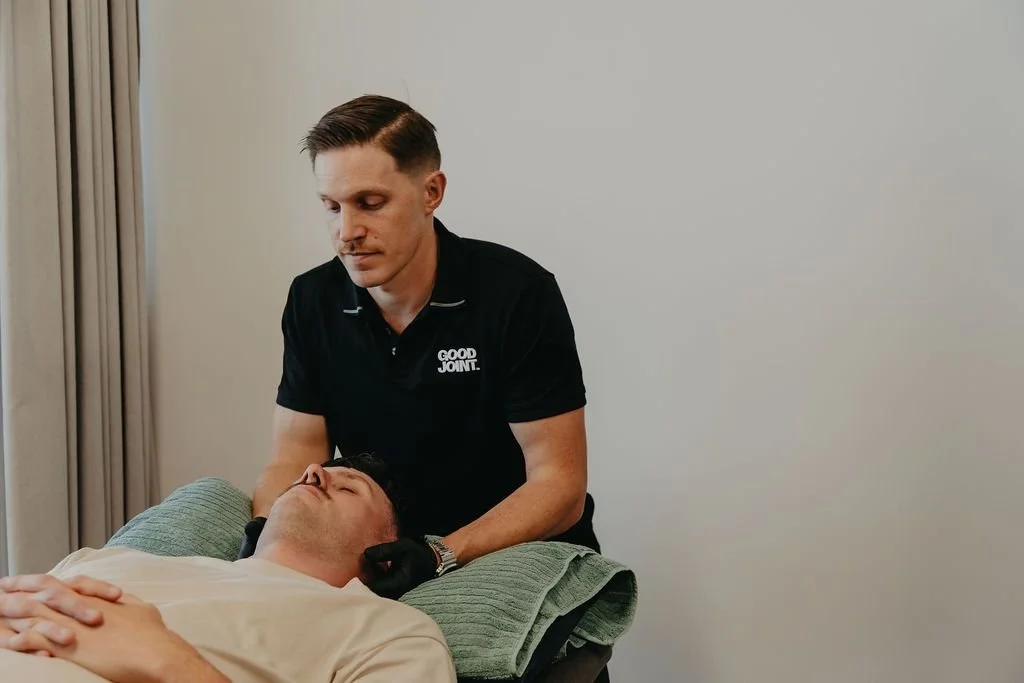
Why Whiplash Deserves Proper Treatment
The Mechanics of a Whiplash Injury
Whiplash occurs when rapid acceleration-deceleration forces produce a sudden hyperextension and hyperflexion of the cervical spine. This mechanism strains the muscles, ligaments, joint capsules, and discs of the neck simultaneously. In higher-energy impacts, cervical facet joints, disc annuli, and neural structures are directly compressed. The initial injury is often more significant than symptoms in the first twenty-four hours suggest, as inflammatory swelling develops over subsequent days.
Whiplash Associated Disorders
The term Whiplash Associated Disorders covers the spectrum of symptoms following whiplash, graded from WAD 0 through WAD 4 based on severity. Most presentations fall into WAD 1 or 2 involving soft tissue injury without neurological signs. WAD 3 involves neurological deficit from nerve root involvement. WAD 4 involves fracture. Grading the injury guides the urgency and nature of imaging and treatment.
Chronic Whiplash & Central Sensitisation
Approximately twenty to forty percent of whiplash injuries persist beyond three months. Persistent whiplash involves a combination of ongoing structural tissue changes, central nervous system sensitisation, and psychological factors including fear avoidance. Early active treatment, reassurance, and gradual return to normal movement dramatically reduces the likelihood of chronicity compared to passive rest and collar immobilisation.
At The Good Joint our team provides thorough whiplash assessment, evidence-based treatment, and clear progress reporting for WorkCover and CTP purposes throughout your recovery.
Book Visit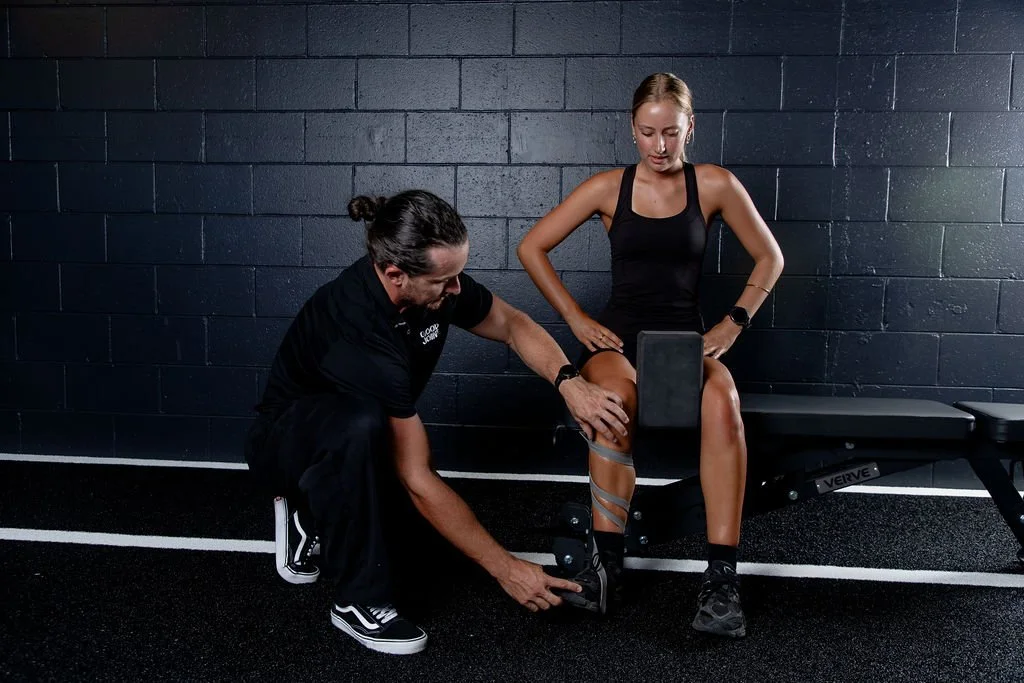
WHAT TO EXPECT DURING YOUR FIRST VISIT
Discussion:
A brief chat about what's brought you in and how it has been impacting your lifestyle.
Physical Assessment:
Functional testing to assess and identify underlying factors contributing to your symptoms.
Recovery Plan:
A tailored approach for working on your specific needs, including personalised exercise prescription.
Treatment:
Hands-on treatment including active release, soft tissue work, and dry needling for fast relief.
Structures Injured in Whiplash
Cervical Facet Joints
The cervical facet joints, particularly at C2-C3 and C5-C6, are among the most commonly injured structures in whiplash. Capsular tears and synovial folds in the facet joint are a primary source of persistent neck pain following whiplash. Joint mobilisation and manipulation directed at these levels is among the most effective treatments available for facet-driven post-whiplash neck pain.
Muscle Strains & Ligament Sprains
The deep cervical flexors, scalenes, sternocleidomastoid, and upper trapezius are all vulnerable in whiplash. Muscle strain and ligament sprain produce localised pain and guarding in the acute phase. Graduated movement, soft tissue treatment, and progressive return to normal activity are the cornerstones of management in the early weeks.
Cervical Disc Injury
High-energy whiplash can produce annular tears in the cervical discs, which may or may not be visible on standard MRI. Disc involvement produces deep, aching neck pain that worsens with sustained postures and may refer into the shoulder, arm, or upper back. Specific cervical rehabilitation addressing deep neck flexor strength and disc load management is the most evidence-supported conservative approach.
Concussion & Neurological Involvement
Whiplash and concussion frequently co-occur in motor vehicle accidents. Concussion should be screened for in all whiplash presentations, particularly where headache, cognitive symptoms, light sensitivity, or dizziness are present alongside neck pain. Where both are present, treatment priorities and return-to-activity timelines must account for both injuries.
Temporomandibular Joint Involvement
The jaw is frequently affected in whiplash as the indirect forces transmitted through the skull and mandible strain the temporomandibular joint and masseter. Post-whiplash jaw pain, clicking, and restricted mouth opening should be assessed alongside the cervical spine and treated in the same clinical episode.
Whiplash that is assessed early, treated appropriately, and managed with an active approach resolves far more reliably than whiplash that is rested and medicated until symptoms either resolve or persist indefinitely. Getting the right assessment and treatment in place early is the most important thing you can do.
Book Visit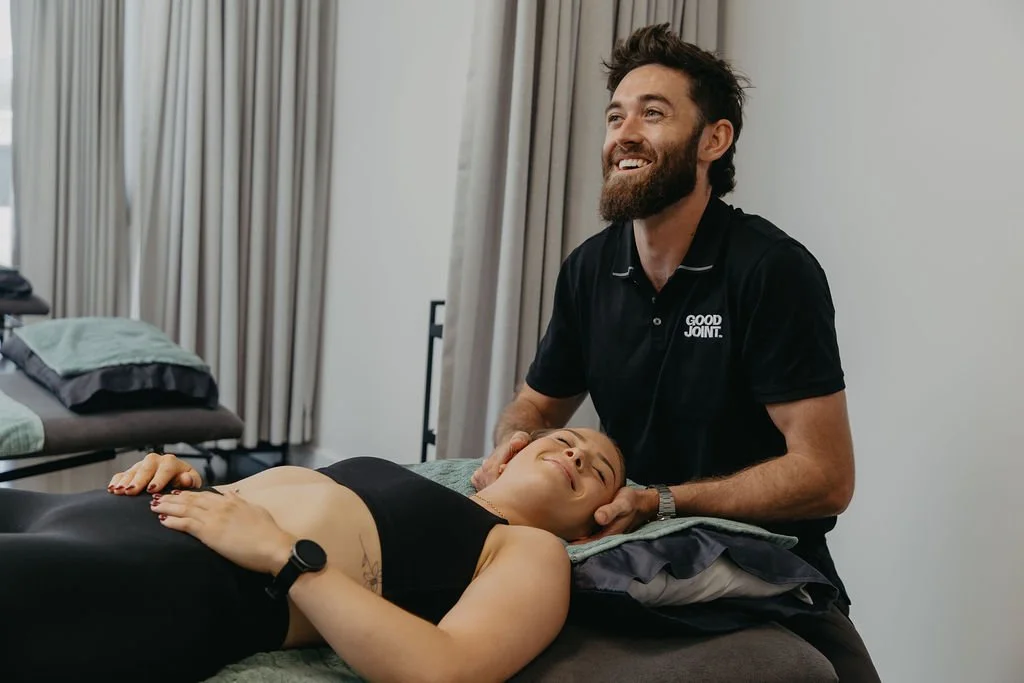
Symptoms of Whiplash & Car Accident Injury
Whiplash symptoms may not reach their peak until twenty-four to seventy-two hours after the accident. A symptom-free period immediately after the incident does not indicate a minor injury.
Early active treatment of whiplash produces significantly better outcomes than rest and waiting. If you have been in a motor vehicle accident, assessment within the first week gives you the best possible foundation for a full recovery.
Book NowFrequently Asked Questions About Whiplash & Car Accident Injuries
Should I wait to see how my whiplash settles before seeking treatment?
No. Evidence consistently shows that early active treatment produces better outcomes than rest and waiting in whiplash. The first two weeks following a whiplash injury are the window where appropriate treatment has the most impact on long-term outcomes. Waiting allows soft tissue to heal in a shortened, guarded position, central sensitisation to establish, and fear avoidance to develop. Prompt assessment and early mobilisation is the evidence-based approach.
What does whiplash treatment involve?
Evidence-based whiplash treatment involves a combination of cervical joint mobilisation, deep cervical flexor rehabilitation, graduated return to normal activity, and education about the expected recovery process. In the acute phase, manual therapy reduces pain and restores range to allow active exercise. Progressive rehabilitation improves strength and control in the cervical stabilisers. Patient education and reassurance about the expected recovery timeline reduces fear avoidance and the risk of chronicity.
Can I claim for whiplash treatment through CTP or WorkCover?
Yes. If your injury occurred in a motor vehicle accident in Queensland, treatment is claimable through your CTP insurer. WorkCover applies to injuries sustained in the course of employment. Our practitioners are experienced with both pathways and can provide the clinical documentation required to support your claim throughout treatment. We will guide you through the process from initial assessment onwards.
What if my whiplash has been present for more than six months?
Chronic whiplash is a real and treatable condition. Even when present for years, the combination of manual therapy targeting the facet joints and disc segments involved, progressive cervical rehabilitation, and where indicated, pain neuroscience education and graded activity, produces meaningful improvement. The absence of improvement with time alone does not mean nothing can be done.
How long does whiplash take to recover?
Most WAD 1 and WAD 2 presentations resolve within six to twelve weeks with appropriate active treatment. WAD 3 presentations with neurological involvement typically take three to six months. Persistent whiplash beyond three months is influenced by the degree of structural injury, the presence of central sensitisation, and psychosocial factors. Early active treatment, positive clinical messaging, and graduated return to activity are the most powerful predictors of good outcome.