Lower Back & Hip Pain Treatment Gold Coast
Lower back and hip pain often occur together, and when they do, it can be difficult to know where one ends and the other begins, which makes finding the right treatment challenging.
Whether your pain is linked to sacroiliac joint dysfunction, referred pain from the lumbar spine, hip joint irritation, muscle imbalance, or a combination of all of these, The Good Joint assesses the full picture to identify what is driving your symptoms and build a plan that addresses them together.
Book Now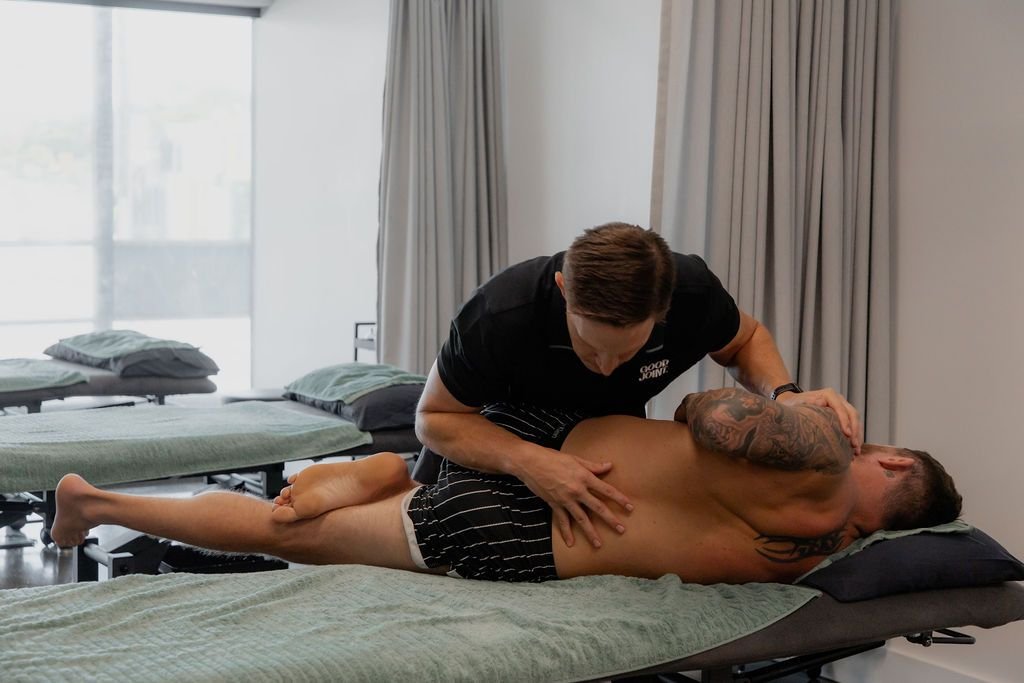
Lower Back & Hip Pain Are Often Closely Connected
Sacroiliac Joint & Pelvic Mechanics
The sacroiliac joint connects the lumbar spine to the pelvis and sits directly between the lower back and the hip. Dysfunction here can produce pain that spreads into both regions simultaneously, making it one of the most commonly overlooked sources of combined lower back and hip pain. Assessing the SIJ as part of any lower back and hip presentation is essential.
Referred Pain & Nerve Involvement
Pain originating in the lumbar spine can refer through the buttock and into the hip in a pattern that closely mimics a local hip problem. Conversely, hip joint degeneration or restriction can alter pelvic mechanics and increase load on the lower back. Correctly identifying the primary driver is one of the most important steps in treatment.
Muscle Imbalance & Movement Patterns
The relationship between the lower back, pelvis, and hip depends on the coordinated function of multiple muscle groups including the glutes, hip flexors, lumbar erectors, and deep core. When any of these become weak, tight, or overactive, they alter load distribution through the whole region, contributing to pain that can feel like it is coming from everywhere at once.
At The Good Joint, we assess the lumbar spine, sacroiliac joints, hip, and surrounding muscle function together to make sure both areas are properly evaluated and treated as part of a single, connected system.
Book Visit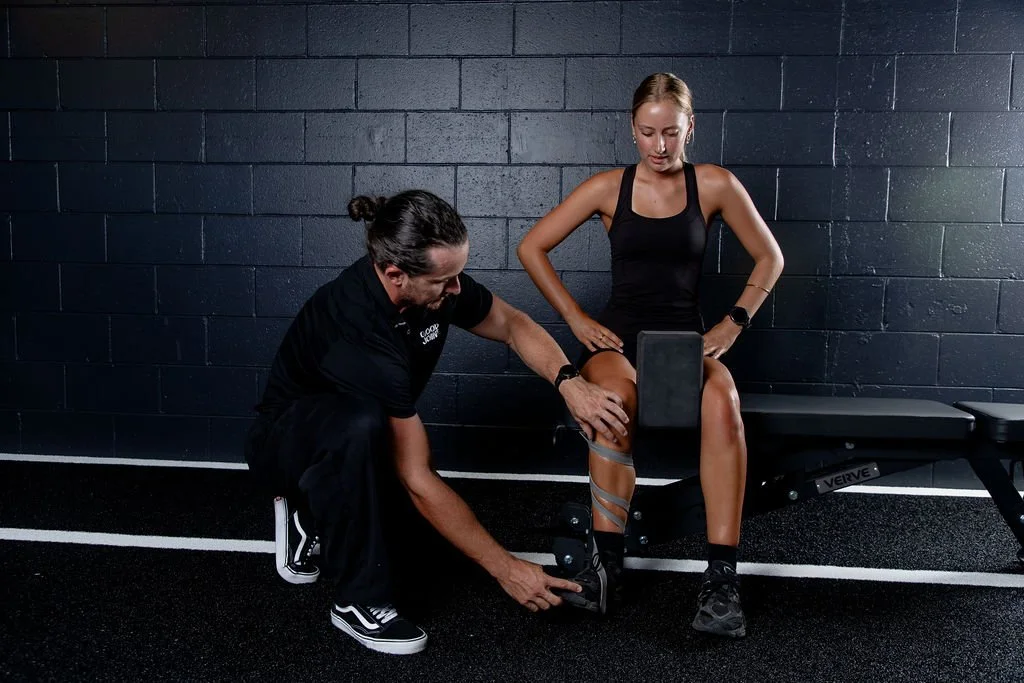
WHAT TO EXPECT DURING YOUR FIRST VISIT
Discussion:
A brief chat about what's brought you in and how it has been impacting your lifestyle.
Physical Assessment:
Functional testing to assess and identify underlying factors contributing to your symptoms.
Recovery Plan:
A tailored approach for working on your specific needs, including personalised exercise prescription.
Treatment:
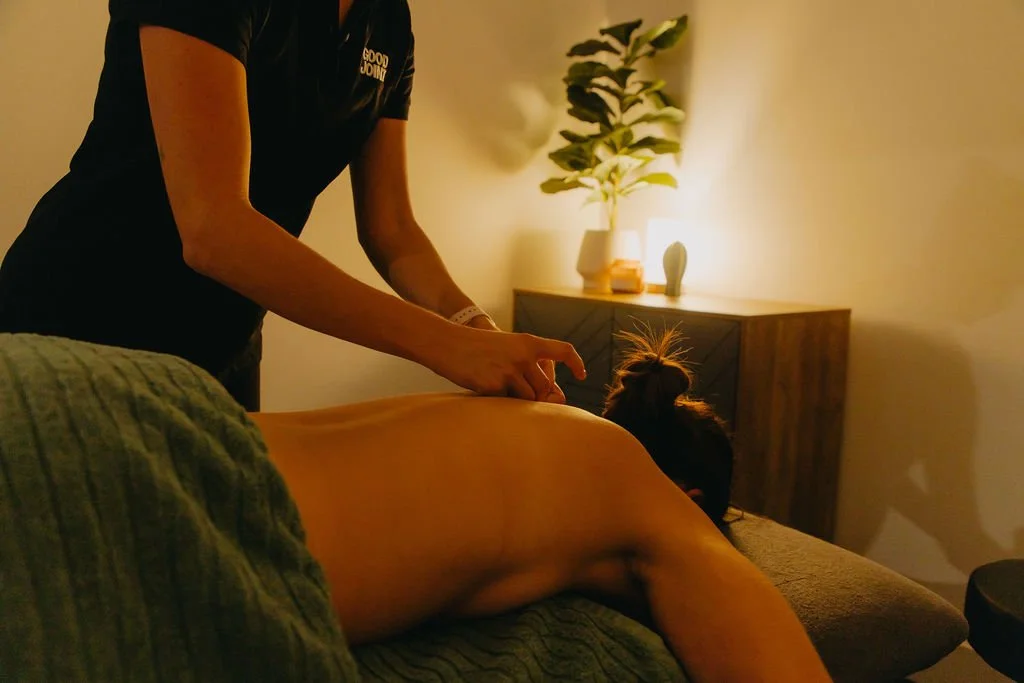
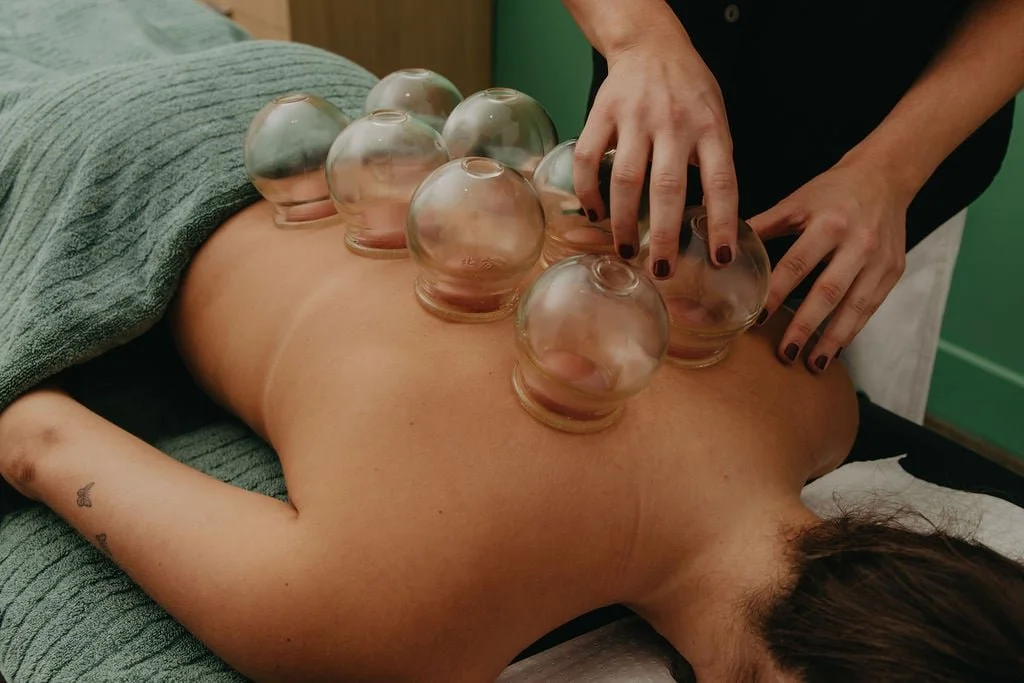
Hands-on treatment including active release, soft tissue work, and dry needling for fast relief.
What Causes Lower Back & Hip Pain?
Sacroiliac Joint Dysfunction
The SIJ is a major load-transfer joint between the spine and the pelvis. When it becomes restricted, hypermobile, or inflamed, it causes pain directly over the joint and can refer into the lower back, buttock, groin, and upper thigh. Pregnancy, leg length differences, altered gait mechanics, and prolonged sitting are common contributing factors.
Lumbar Disc & Nerve Root Referral
A disc bulge or herniation in the lower lumbar spine can compress a nerve root and refer pain, tingling, or weakness into the buttock and hip region in a way that closely mimics a local hip problem. Distinguishing between lumbar referral and true hip joint pathology requires a careful assessment of both regions.
Hip Joint Degeneration & Restriction
Osteoarthritis or restriction in the hip joint alters how the pelvis moves and increases demand on the lumbar spine during walking, standing, and stair climbing. Over time, this compensatory loading can develop into genuine lower back pain on top of the existing hip symptoms, creating a combined presentation that requires both areas to be treated.
Muscle Imbalance & Weakness
Tightness in the hip flexors, weakness in the glutes, and reduced deep core activation all contribute to altered load distribution through the lower back and hip. These patterns develop gradually from sedentary habits, previous injuries, or repetitive one-sided activities and are a common reason why lower back and hip pain persists despite treatment of only one region.
Piriformis Syndrome
The piriformis muscle sits deep in the buttock and can become tight from prolonged sitting, hip imbalance, or overuse. When it compresses the sciatic nerve or surrounding structures, it can cause deep buttock pain that spreads into the hip and lower back, a pattern often referred to as piriformis syndrome. It is frequently mistaken for lumbar disc pathology.
Lower back and hip pain that seems to shift between the two areas or keeps returning despite treatment of just one region is a sign that the full picture has not yet been assessed. A proper evaluation of both the lumbar spine and the hip together is the most reliable way to identify the true source and build a treatment plan that resolves it.
Book Visit
Common Lower Back & Hip Pain Symptoms
The combination of lower back and hip pain often creates a confusing picture where it is hard to pinpoint exactly where the primary problem lies. Symptoms may shift between the two areas, be present in both simultaneously, or change with different activities and positions.
Combined lower back and hip pain benefits from assessment of both regions together. Treating one without fully evaluating the other is one of the most common reasons this type of pain keeps returning.
Book NowFrequently Asked Questions About Lower Back & Hip Pain
How do I know if my pain is coming from my back or my hip?
This is one of the most common questions in combined presentations. True hip joint pain typically presents as deep groin pain that is aggravated by hip rotation and weight-bearing. Lower back or SIJ pain tends to refer into the buttock and outer hip and is affected by lumbar movements. A clinical assessment that tests both regions systematically is the most reliable way to identify the primary driver, and in many cases both are contributing and both need to be addressed.
Can a tight hip cause lower back pain?
Yes. When the hip joint is restricted or the hip flexors are tight, the pelvis is pulled into an altered position and the lumbar spine compensates to maintain upright posture. This compensation increases compressive load on the facet joints and discs of the lower back and is a very common cause of recurring lower back pain in people who sit for long periods or have a history of hip problems.
Can the sacroiliac joint cause both lower back and hip pain?
Yes. The sacroiliac joint sits at the junction of the lumbar spine and the pelvis, and when it is dysfunctional, it can refer pain into the lower back, buttock, hip, and even the groin or thigh. Many people with SIJ dysfunction describe their pain as feeling like it is in both the back and the hip simultaneously without a clear point of origin.
Do I need imaging for lower back and hip pain?
Not always. Many presentations of combined lower back and hip pain can be accurately assessed and treated clinically without the need for imaging. X-rays or MRI may be recommended when there is suspicion of significant structural pathology, nerve involvement, or when symptoms are not responding as expected to conservative treatment. Your practitioner can advise whether imaging is appropriate for your specific situation.
What is the best treatment for lower back and hip pain?
Because combined lower back and hip pain involves multiple structures, the most effective treatment typically draws on more than one discipline. Chiropractic care addresses lumbar and sacroiliac joint restriction through targeted spinal assessment and adjustment, which is often central to resolving the postural loading that maintains both areas of pain. Physiotherapy provides rehabilitation for glute strength, hip mobility, core stability, and movement retraining that corrects the underlying patterns keeping both regions sensitised. Osteopathy takes a whole-body structural view of how the lumbar spine, pelvis, and hip are functioning together and uses a combination of manipulation, mobilisation, and soft tissue work to restore balance across the full region. Remedial massage releases the chronic tightness through the hip flexors, gluteals, lumbar muscles, and piriformis that commonly drives and maintains combined lower back and hip presentations. At The Good Joint, all of these disciplines work together under one roof so your assessment and treatment plan covers both regions comprehensively from the first appointment.